
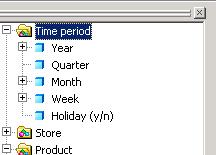
Best Practices for Organizing and Naming Objects
While working with many Universes, I’ve noticed that sometimes not enough attention is given to naming objects and the ordering of objects. This in turn may cause confusion with the business users since they are not completely clear on what each of the objects do. Ordering of objects When you have objects of the same class grouped together, it makes it much clearer to the business user to view...
December 4th, 2008 by David Lai
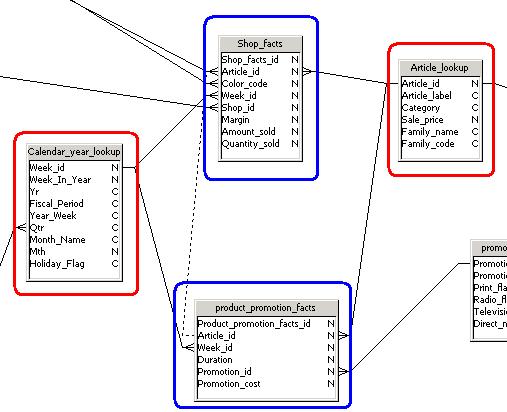
Preventing Chasm and Fan Traps!
In this article I would like to talk about Chasm traps and Fan traps. These are problems that we often experience while building universes and reports. When encountering these traps, one may wonder what is going on? How come my sum statements arent adding up correctly? Or why am I missing some rows? A properly designed universe will help avoid these problems. In addition, a good understanding about...
November 18th, 2008 by David Lai

Content Management planning in Business Objects Enterprise
Proper content management planning is a critical element in the design process of a Business Objects enterprise system, unfortunately because of tight deadlines and lack of experience, many times there is not enough time spent here and users are left with a system that’s unorganized and tough to maintain. I have experienced this first hand so I would like to write about some simple measures to...
November 6th, 2008 by David Lai
All you need to know about opendoc
I’ve seen quite alot of postings in the Business Objects forum on calling the opendoc function from either a web intelligence report or Xcelsius dashboard. You can download the pdf instructions on all the opendoc parameters here opendoc detailed instructions I’ve also provided instructions on drilling down to a Web Intelligence document from Xcelsius here And an Xcelsius open doc worksheet...
November 4th, 2008 by David Lai

Building Scorecards in Xcelsius 2008 and the significance of Global Embedded Fonts
One of the very powerful new additions to Xcelsius 2008 is the ability to create scorecards easily. If we wanted to create scorecards in Xcelsius 4.5 we would need to manually insert trending icons into each row in order to create a scorecard. In Xcelsius 2008 however we can use a label based menu with alerts. The alerts will act as the trending icons and from there we only need one object to show...
October 21st, 2008 by David Lai

Importance of Web Intelligence Contexts
With calculation contexts in web intelligence we are able to generate powerful reports quick and easily. Let’s take an example where we have the following dimensions (year, quarter, product) and measure (revenue). We can easily build a table to represent the sales revenue for each product in that quarter and year. Now what if we wanted to display the sales revenue in a different context. For...
October 16th, 2008 by David Lai
Xcelsius 2008 Refresh on Load
One of the major issues I’ve encountered with Xcelsius 2008 was refreshing too many Live Office components on load from the Data Manager. This would cause the browser to crash when loading the swf. I’m not sure if it’s a bug but a workaround I discovered was to use a Reporting Services Button to perform the refresh on load. You can find the button in the Web Connectivity components...
October 9th, 2008 by David Lai

Alpha Numeric Sorter
Here is an Xcelsius Example that ranks your table based on whether you want to rank it numerically or alphabetically. [kml_flashembed publishmethod=”static” fversion=”8.0.0″ movie=”http://www.davidlai101.com/blog/media/blogs/bobj/Excel%20Ranker/Alphanumeric%20Sorter.swf” width=”500″ height=”200″ targetclass=”flashmovie”] [/kml_flashembed] Many...
October 8th, 2008 by David Lai
About David Lai

SAP BusinessObjects Dashboards 4 Cookbook


